
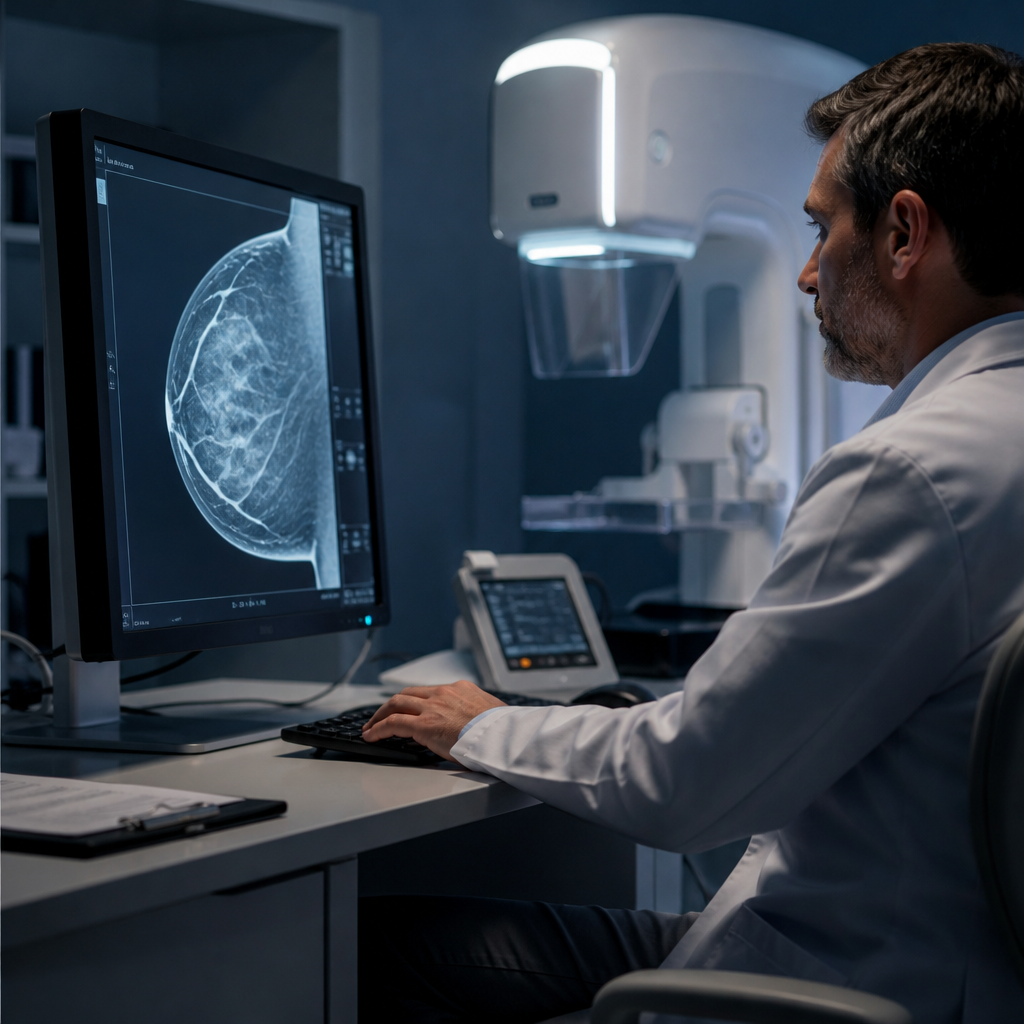
Breast health screening has evolved significantly over the past two decades, moving far beyond the traditional mammogram. While routine screening remains the foundation of early detection, certain findings require more sophisticated diagnostic approaches. Understanding when and why advanced imaging techniques become necessary can help you make informed decisions about your breast health journey.
The Limitations of Standard Screening Methods
Mammography remains the gold standard for breast cancer screening, detecting approximately 80-90% of breast cancers in women without symptoms. However, this statistic also reveals an important gap: mammograms don’t catch everything. Dense breast tissue, which affects nearly half of women over 40, can obscure tumors on traditional X-ray images. The overlapping patterns of dense tissue and potential abnormalities create what radiologists call a “masking effect.”
Ultrasound serves as a valuable supplementary tool, particularly for distinguishing fluid-filled cysts from solid masses. It’s non-invasive, uses no radiation, and works well for guiding needle biopsies. Yet ultrasound has its own constraints: it’s operator-dependent, less effective for detecting microcalcifications, and offers limited visualization of tissue deep within the breast or near the chest wall.
When More Precise Imaging Becomes Essential
Several clinical scenarios demand imaging technology that goes beyond conventional methods. If your mammogram shows an area of concern that remains unclear on follow-up images, or if you have dense breast tissue with a suspicious finding, your radiologist may recommend magnetic resonance imaging. This becomes particularly relevant when multiple biopsies have yielded inconclusive results, when there’s a discrepancy between different imaging findings, or when planning surgical treatment requires exact mapping of disease extent.
Women at high genetic risk for breast cancer—those with BRCA mutations or strong family histories—often receive MRI as part of their routine screening protocol. The enhanced sensitivity of magnetic resonance imaging can detect cancers that mammography misses, though this comes with a trade-off: higher sensitivity sometimes means more false positives, leading to additional testing.
The Role of Advanced Biopsy Techniques
When imaging reveals an abnormality that requires tissue sampling, the method of biopsy matters considerably. Standard ultrasound-guided or stereotactic biopsies work well for most lesions visible on conventional imaging. However, some abnormalities appear only on MRI scans—these MRI-only lesions present a unique diagnostic challenge. For these cases, an mri guided biopsy breast procedure allows physicians to precisely target and sample tissue that cannot be adequately visualized with other imaging methods. This specialized approach is available at multi-specialty hospitals equipped with dedicated breast imaging suites and experienced radiologists trained in advanced interventional techniques.
How the Procedure Works
During an MRI-guided biopsy, you lie face-down on a special table with openings for your breasts. The radiologist uses real-time MRI images to calculate the exact coordinates of the suspicious area, then advances a needle through a small skin incision to collect tissue samples. The entire process typically takes 45 to 90 minutes, considerably longer than ultrasound-guided biopsies, which usually take 20 to 30 minutes. Local anesthesia keeps you comfortable throughout, though you must remain very still to ensure accurate targeting.
Healthcare Infrastructure and Access to Specialized Services
The availability of advanced diagnostic imaging correlates strongly with healthcare investment and infrastructure development. Abu Dhabi has positioned itself as a regional hub for medical innovation, attracting institutions that offer comprehensive diagnostic capabilities under one roof. This concentration of resources means patients can access specialized imaging, pathology analysis, and multidisciplinary consultations without navigating multiple facilities.
The integration of services matters more than many people realize. When diagnostic imaging, biopsy capabilities, and treatment planning exist within the same healthcare system, communication between specialists improves, results move faster, and care coordination becomes more seamless. This proves especially valuable for patients requiring rapid workup of concerning findings or those managing complex medical histories alongside their breast health concerns.
Interpreting Your Results and Next Steps
Biopsy results typically arrive within three to five business days. Pathologists classify findings using standardized categories: benign, atypical, or malignant. Benign results mean no cancer, though some benign findings like atypical hyperplasia carry increased future risk and may warrant more frequent monitoring. Atypical results fall into a gray zone—not quite cancer but abnormal enough to require surgical removal and thorough examination. Malignant results trigger a cascade of additional testing to determine cancer type, hormone receptor status, and treatment recommendations.
Understanding that a biopsy recommendation doesn’t equal a cancer diagnosis helps manage the anxiety that accompanies this process. Statistics show that roughly 70-80% of breast biopsies return benign results. Even when cancer is detected, outcomes have improved dramatically: the five-year relative survival rate for localized breast cancer now exceeds 99%, largely because of earlier detection and more targeted treatments.
The Broader Picture of Preventive Health
Breast health represents just one component of comprehensive wellness. Cardiovascular health demands similar attention to specialist selection and diagnostic precision, and the same principles apply across medical specialties: know when screening suffices and when advanced diagnostics become necessary, understand the capabilities of different healthcare providers, and advocate for the level of care your situation requires.
Maintaining breast health involves more than responding to abnormal findings. Regular self-exams, though no longer universally recommended as formal screening, help you learn what’s normal for your body. Annual clinical breast exams by a healthcare provider and age-appropriate mammography screening form the baseline. Risk-reducing strategies—maintaining a healthy weight, limiting alcohol consumption, staying physically active, and considering the timing and duration of hormone therapy if needed—all contribute to lowering your overall risk profile.
Making Informed Healthcare Decisions
When faced with recommendations for advanced imaging or biopsy procedures, asking the right questions empowers better decision-making. Inquire about the specific indication for the test, what alternatives exist, how results will change your management, and what happens if you choose watchful waiting instead. Understanding the radiologist’s experience with the particular procedure and the facility’s volume of similar cases provides insight into expertise levels.
Second opinions serve a valuable role when dealing with unclear findings or when choosing between management approaches. Bringing previous imaging studies and reports to a new provider ensures they have complete information. Don’t hesitate to request copies of your images and reports for your personal records—these belong to you and facilitate continuity of care if you move or change providers.
Ultimately, breast health management requires partnership between you and your healthcare team. Advanced diagnostic techniques provide answers when standard approaches fall short, offering clarity that guides appropriate treatment or reassurance that allows you to move forward confidently. Understanding these tools and when they become necessary transforms anxiety into informed action.
