
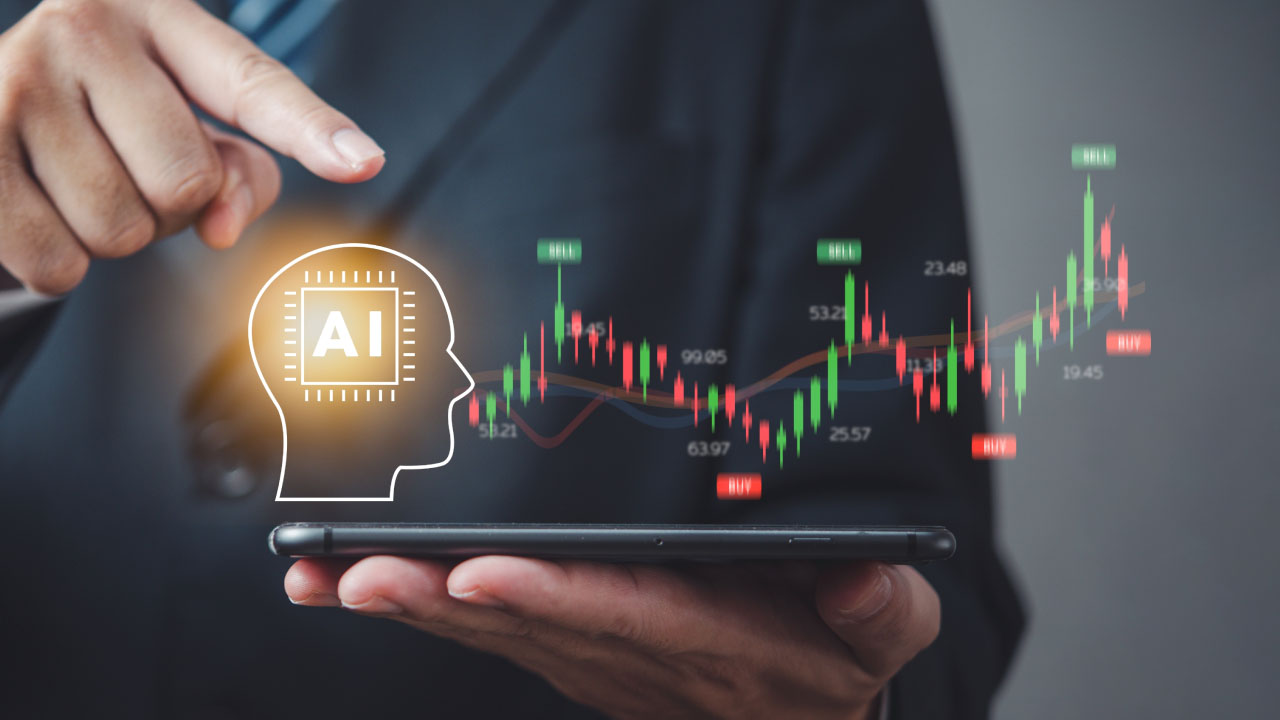
The financial markets churn out an overwhelming torrent of data every single second, creating a landscape that’s become virtually impossible for human traders to navigate effectively in real-time. You’re watching a fundamental transformation in how trading decisions get made, as artificial intelligence systems now process millions of data points simultaneously while human traders can barely keep track of a handful of indicators. This technological revolution has reshaped the trading environment, enabling split-second decisions based on comprehensive analysis that would take humans hours, or even days, to complete manually. The speed and accuracy advantages that AI brings to market analysis don’t just represent an incremental improvement; they signal a complete paradigm shift in how financial markets operate.
The Processing Power Behind AI Trading Systems
AI trading systems leverage computational capabilities that far exceed human cognitive limitations, processing vast quantities of market data at speeds measured in microseconds rather than seconds or minutes. When you consider that modern trading algorithms can analyze thousands of technical indicators, news feeds, social media sentiment, and historical patterns simultaneously, the gap between human and machine capabilities becomes starkly apparent. These systems utilize advanced processors and specialized hardware designed specifically for rapid data analysis, allowing them to evaluate multiple trading scenarios and potential outcomes in the time it takes you to blink. The neural networks powering these AI systems contain millions of interconnected nodes that work in parallel, mimicking the structure of the human brain but operating at computational speeds that biological systems simply can’t match.
Pattern Recognition at Unprecedented Scale
One of the most significant advantages AI trading systems possess is their ability to identify complex patterns across massive datasets that would be completely invisible to human observation. You can appreciate this capability when you realize that these systems can simultaneously monitor thousands of securities across multiple exchanges, detecting correlations and anomalies that emerge from comparing years of historical data with real-time market movements. Machine learning algorithms excel at finding subtle relationships between seemingly unrelated market variables, how weather patterns might influence agricultural commodity prices, or how geopolitical events correlate with currency fluctuations. These systems continuously refine their pattern recognition abilities through training on historical data, learning from both successful and unsuccessful trades to improve their predictive accuracy over time.
Real-Time Data Integration from Multiple Sources
Modern AI trading systems demonstrate their superiority through their ability to integrate and analyze data from an extraordinarily diverse array of sources simultaneously, creating a comprehensive market view that no human trader could possibly maintain. You benefit from understanding that these systems pull information from traditional market feeds, alternative data sources including satellite imagery, credit card transaction data, shipping records, and even parse through earnings calls and regulatory filings in real-time. The AI processes structured data like price and volume information alongside unstructured data such as news articles, social media posts, and analyst reports, synthesizing all this information into actionable trading signals within milliseconds. Natural language processing capabilities allow these systems to interpret the sentiment and meaning behind written and spoken communications, gauging market sentiment shifts faster than human traders can even read the headlines.
Decision Execution Speed and Market Timing
The execution speed of AI trading systems represents perhaps their most obvious advantage over human traders, with algorithms capable of identifying opportunities and placing trades in timeframes measured in millionths of a second. You should recognize that in modern electronic markets, the difference between profitable and unprofitable trades often comes down to who can execute first, and AI systems dominate this race completely. High-frequency trading algorithms can complete thousands of trades in the time it takes you to move your mouse cursor to click a button, capitalizing on tiny price discrepancies that exist for only fractions of a second. For cryptocurrency traders who need to monitor multiple exchanges and execute trades across volatile 24/7 markets, the best AI crypto trading bot platforms automate these complex processes that would be impossible to manage manually. These systems eliminate the latency inherent in human decision-making processes, where you must consciously recognize an opportunity, evaluate it, decide on an action, and then physically execute the trade. By the time a human trader completes this sequence, market conditions have often already changed, making the original opportunity obsolete or significantly less profitable. The competitive edge that milliseconds provide in modern markets has essentially made human-speed trading obsolete in many market segments.
Continuous Learning and Adaptation
AI trading systems continuously evolve their strategies through machine learning processes that allow them to adapt to changing market conditions faster than human traders can update their knowledge and approaches. You’re dealing with systems that automatically adjust their parameters and decision-making criteria based on performance feedback, learning what works and what doesn’t in different market environments without human intervention. These adaptive algorithms can detect when market regimes shift, such as moving from low-volatility to high-volatility conditions, and automatically modify their trading strategies to suit the new environment. The self-improvement cycle that AI systems engage in operates constantly, with each trade providing additional data that refines future decision-making processes. Research from the CFA Institute has highlighted how machine learning applications in finance continue to advance rapidly, with systems becoming increasingly sophisticated in their ability to handle complex market dynamics and uncertainty. Unlike human traders who might need months or years to recognize that their strategies need adjustment, AI systems can identify underperformance and implement strategic changes within hours or even minutes. This adaptive capability means that AI trading systems don’t just maintain static excellence, they’re constantly getting better at what they do.
Conclusion
The advantages that AI trading systems hold over human traders in analyzing market data represent a fundamental shift in how financial markets operate and how trading decisions get made. You’ve seen how these systems combine unprecedented processing power, sophisticated pattern recognition, multi-source data integration, lightning-fast execution, and continuous learning to create capabilities that human traders simply can’t match. While human judgment, creativity, and strategic thinking still play important roles in overall investment management and setting broad trading parameters, the actual analysis of market data and execution of trades has increasingly moved to the realm of artificial intelligence. Understanding these capabilities helps you appreciate both the opportunities and challenges that AI brings to modern financial markets.
