
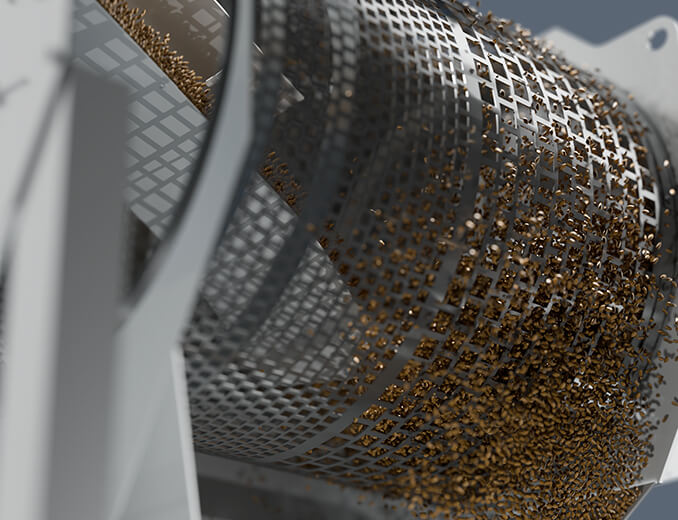
Effective management of utility costs starts with precise measurement of mechanical efficiency. Production teams analyze how much electricity is consumed to reduce raw ingredients into finished feed, as this data dictates operational profitability. FAMSUN provides the technical tools to assist facilities in measuring these parameters accurately, ensuring that energy use remains within expected parameters for each processing line.
Calculating Energy per Ton
To determine the specific energy consumption, operators calculate the kilowatt-hours (kWh) required to produce one ton of finished product. The formula requires data on the motor’s power consumption and the actual hourly throughput. First, they measure the motor’s amperage during steady-state milling grinding operations. By applying the formula for electrical power, they convert this draw into kilowatts. Once the kilowatts are established, dividing this value by the tons per hour output provides the specific energy consumption metric, measured in kWh/ton. Utilizing a hammer mill feed grinder for this assessment provides clear data points regarding how internal hardware configurations impact power draw.
Ingredient Benchmarks and Screen Sizes
Specific energy requirements change significantly based on the material being processed. Harder grains require more aggressive impact, which typically increases the kWh/ton value. Furthermore, the screen size within the hammer mill feed grinder serves as a primary variable. A smaller screen forces the material to remain in the grinding chamber longer, increasing the total work performed and raising energy consumption per unit of output. Operators establish their own benchmarks by testing different grains, such as corn or soy, against various screen dimensions. These recorded values help them forecast future energy costs and identify when wear parts require replacement to regain efficiency.
Operational Adjustments
FAMSUN supports these efforts by offering high-precision monitoring systems integrated into their equipment. By identifying the energy signature of the milling grinding process, management makes informed decisions regarding production schedules. If the kWh/ton value exceeds established benchmarks, it often signals an issue with screen integrity or hammer wear. Monitoring these figures allows for proactive maintenance rather than reactive repairs, stabilizing costs across the entire operation.
Calculating specific energy consumption offers visibility into the efficiency of a feed mill. Through rigorous measurement of amperage and throughput, teams gain the necessary insights to refine their processes. Data-driven adjustments based on these calculations support consistent and efficient production for all types of feed processing needs.
