
Color consistency has become an important quality factor for sealant applications where appearance directly affects the final project result. In architectural projects, decorative installations, and industrial assemblies, customers expect every batch to maintain the same approved shade throughout the supply period.
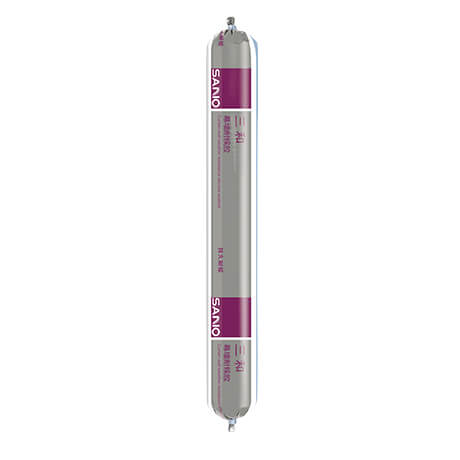
Achieving stable color performance during large-scale production is not simply a matter of adding the correct amount of pigment. Mixing conditions, equipment design, material flow, and process control all influence how pigments are distributed inside the sealant system.
Automated mixing is not just about efficiency—it is about stability and reliability. SANVO optimizes these processes to strengthen color control and production consistency. With better equipment operation and manufacturing oversight, a silicone sealant manufacturer can minimize batch differences and still meet the demanding needs of custom applications.
Why Color Matching Becomes More Difficult During Industrial Production
A laboratory-developed sealant color may appear consistent when produced in a small quantity, but transferring that formula into commercial manufacturing introduces new challenges.
Industrial mixers handle significantly larger material volumes, creating different movement patterns and mechanical forces compared with laboratory equipment. If the mixing process is not carefully controlled, pigment particles may not distribute evenly throughout the sealant.
The challenge intensifies with complex colors. Multiple pigments must be precisely balanced because even minor dispersion changes affect the final shade. That is why professional manufacturers approach color matching as a production engineering discipline, not just a formulation exercise.
Optimizing Mixing Equipment Design for Better Pigment Distribution
The structure of mixing equipment plays a major role in achieving consistent sealant colors. Different mixer designs generate different levels of shear force, material movement, and blending efficiency.
An optimized system ensures that all components experience sufficient interaction during processing. This allows pigments, fillers, polymers, and additives to combine more evenly throughout the mixture.
Poor equipment configuration may create areas with different pigment concentrations, leading to visible color variation after curing.
By adjusting mixing components and operating conditions, manufacturers can create a more uniform material structure and improve repeatability between production batches.
Controlling Shear Force Without Affecting Sealant Performance
Mixing intensity is one of the most important factors in color consistency. Strong mechanical action can improve pigment dispersion, but excessive force may influence other sealant properties.
Too much shear can generate unnecessary heat or affect the stability of certain formulation components. Insufficient mixing, on the other hand, may leave pigments unevenly distributed.
Achieving visual uniformity and technical performance in silicone sealants demands a balanced approach. Mixing speed, duration, and mechanical energy must be carefully optimized to ensure that color development does not compromise curing characteristics, elasticity, or adhesion—each factor must be controlled in relation to the others.
The Role of Temperature Management During Mixing
Temperature changes during production can influence both processing behavior and final color appearance.
Sealant materials often contain components with different sensitivities to heat. If mixing generates excessive temperature increases, certain ingredients may behave differently and affect the final product appearance.
Automated equipment allows manufacturers to monitor and regulate temperature during processing. Stable thermal conditions help maintain predictable material behavior throughout the mixing cycle.
This is especially valuable for products requiring precise color matching because even minor processing differences can create visible shade variations when comparing multiple production batches.
Preventing Color Drift Between Different Production Batches
One of the biggest challenges for sealant suppliers is maintaining the same color over repeated manufacturing cycles.
A customer may place multiple orders months apart, but the new batch still needs to match the original approved sample. Achieving this requires more than maintaining the same formula.
Production teams must ensure that equipment settings, mixing procedures, and material handling methods remain consistent.
Automated systems help establish repeatable manufacturing conditions by reducing unexpected changes during operation. This creates a stronger foundation for long-term color stability and reliable supply.
Improving Material Handling Before the Mixing Stage
Color consistency begins before materials enter the mixer. Raw material storage, preparation, and feeding processes can influence final sealant appearance.
Pigments and additives require careful handling because contamination, moisture exposure, or incorrect preparation may affect dispersion quality.
Automated feeding systems improve accuracy by delivering materials according to predefined requirements. This reduces variations caused by manual measurement differences and supports a more controlled production environment.
When material preparation and mixing operations work together, manufacturers can achieve better color reproduction from initial formulation to final packaging.
Using Advanced Equipment to Support High-Volume Color Requirements
Large-scale sealant projects often involve significant quantities of the same color. Customers expect suppliers to deliver consistent products without visible differences between packages.
Automated mixing equipment allows manufacturers to handle higher production volumes while maintaining tighter process control.
This capability is particularly important for construction and industrial customers who need reliable color matching across different project stages.
A well-managed automated system provides manufacturers with the flexibility to produce larger quantities while maintaining the visual standards required by professional applications.
How Equipment Optimization Supports Customer Confidence
For sealant buyers, consistent color is a reflection of manufacturing reliability. A supplier that can maintain appearance quality across repeated orders demonstrates stronger process management capabilities.
Equipment optimization helps reduce production uncertainty and provides better assurance that approved samples will match delivered products.
Although customers may initially focus on technical specifications such as adhesion and durability, stable appearance performance also contributes to overall project satisfaction.
Choosing a manufacturer with advanced production capabilities can help reduce installation concerns and avoid unnecessary quality disputes.
Conclusion
Automated mixing optimization plays a critical role in achieving consistent sealant color performance. Equipment design, mixing control, temperature management, and material handling all contribute to stable pigment distribution and repeatable production results.
Color consistency is not a cosmetic extra—it is a production discipline. SANVO applies advanced manufacturing practices to align visual accuracy with reliable sealing performance across different requirements.
Continuous optimization of automated mixing systems helps deliver that alignment. Suppliers who understand the link between equipment and color control give customers confidence that quality will hold up over time.
