
When comparing a copy trading platform, many investors naturally focus on return, win rate, or recent performance. However, one of the most important figures to examine is maximum drawdown. It shows how much an account or strategy declined from a previous peak during a specific period, giving investors a clearer view of the risk involved.
For anyone comparing top copy trading platforms, understanding maximum drawdown can help distinguish between attractive returns and strategies that may expose capital to significant fluctuations. Rather than looking at performance in isolation, investors should consider how a strategy achieved its results and how much capital was placed at risk along the way.
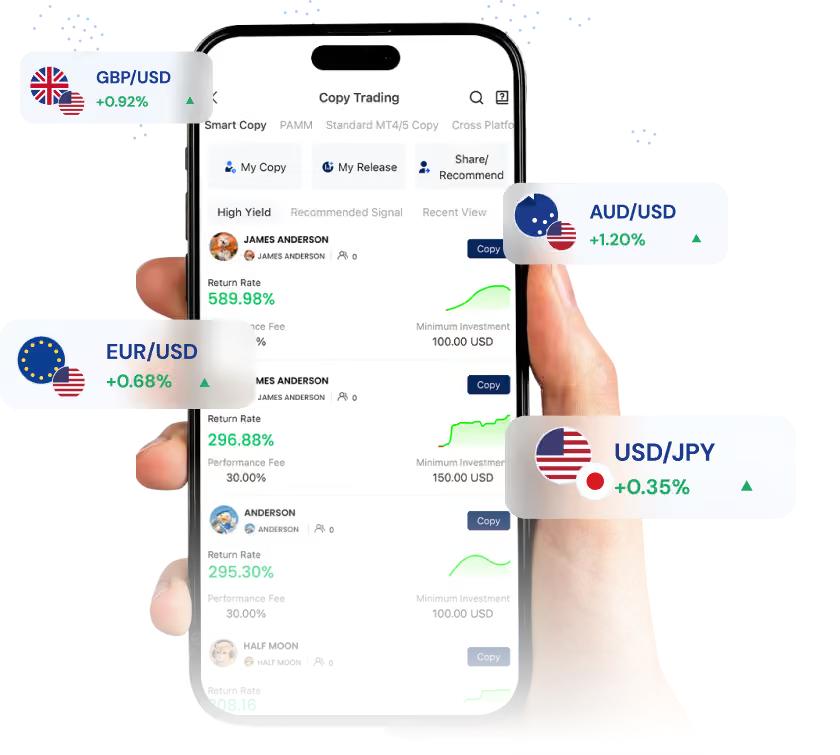
What Does Maximum Drawdown Mean in Copy Trading?
Maximum drawdown measures the largest decline from a peak in account value to a subsequent low before the account reaches a new peak. For example, if a strategy grows from $10,000 to $12,000 and later falls to $10,800, the drawdown from that peak is 10%.
In copy trading, this number matters because copied positions can create the same gains and losses in the follower’s account. A trader with a high historical return may still experience substantial drawdowns. Therefore, maximum drawdown provides additional context that a return percentage cannot show on its own.
It is also important to remember that historical drawdown does not establish a fixed limit for future losses. Market conditions can change, and previous performance may not accurately predict future results.
Why Should Maximum Drawdown Matter to Copy Traders?
A common mistake among new copy traders is selecting a strategy based primarily on its highest return. While strong returns can attract attention, they do not necessarily indicate suitable risk management.
Consider two strategies. One generates a 30% return with a 5% maximum drawdown, while another generates 40% with a 25% maximum drawdown. The second strategy produced a higher return, but it also required investors to tolerate much larger declines.
This comparison highlights why risk tolerance should be part of the selection process. Investors should ask whether they would remain comfortable following a strategy during a significant losing period. If a drawdown is large enough to cause an investor to disconnect from the strategy at the worst possible moment, the historical return may have little practical value.
How to Evaluate Strategies Beyond One Number
Maximum drawdown should be considered alongside other indicators rather than treated as a standalone ranking metric. Investors can examine the strategy’s historical return, trading frequency, duration, asset selection, and consistency.
The length of the trading history is particularly relevant. A strategy with a short record may show an attractive return while having limited evidence across different market conditions. A longer history can provide more context, although it still cannot eliminate future uncertainty.
Investors should also understand how positions are sized. A strategy that frequently uses large positions or significant leverage may experience sharper changes in account value. Since leveraged CFD trading can magnify both gains and losses, understanding the underlying trading approach is essential.
What to Look for in a Copy Trading Platform
A suitable copy trading platform should provide enough information for users to evaluate strategies rather than simply displaying performance rankings. Clear trader profiles, historical results, risk metrics, allocation controls, and account visibility can all support more informed decisions.
GTCFX’s copy trading service allows users to review trader profiles and performance, select a strategy, allocate capital, and monitor results through their account. The platform states that copied trades are executed automatically after a trader is selected, while users retain visibility and control over their allocation.
For investors comparing top copy trading platforms, transparency should therefore be considered alongside platform functionality. A useful platform is not simply one that displays high performing traders. It should also make it easier for users to understand the risks associated with different strategies.
A Practical Approach to Choosing a Strategy
Before copying a trader, investors can establish a personal maximum acceptable drawdown. They can then compare available strategies against that threshold instead of selecting purely on the basis of return.
It is also worth reviewing whether the strategy matches the investor’s preferred market exposure and investment horizon. GTCFX provides access to multiple CFD markets, including forex, energy, indices, metals, shares, crypto, and futures, although availability can vary by jurisdiction and account conditions.
Most importantly, investors should avoid assuming that copying another trader removes the need for risk management. GTCFX explicitly states that copy trading involves significant risk, does not guarantee profits, and that past performance is not a reliable indicator of future results.
Make Drawdown Part of the Decision
Maximum drawdown is one of the clearest ways to understand the downside history of a copy trading strategy. It does not predict future losses, but it can reveal how much pressure an investor might have experienced while following a particular trader.
When evaluating a copy trading platform or comparing top copy trading platforms, investors should look beyond headline returns and examine drawdown, consistency, trading style, position sizing, and personal risk tolerance together. GTCFX provides tools for reviewing trader performance and managing allocated capital, giving users a framework for making their own strategy selections.
