
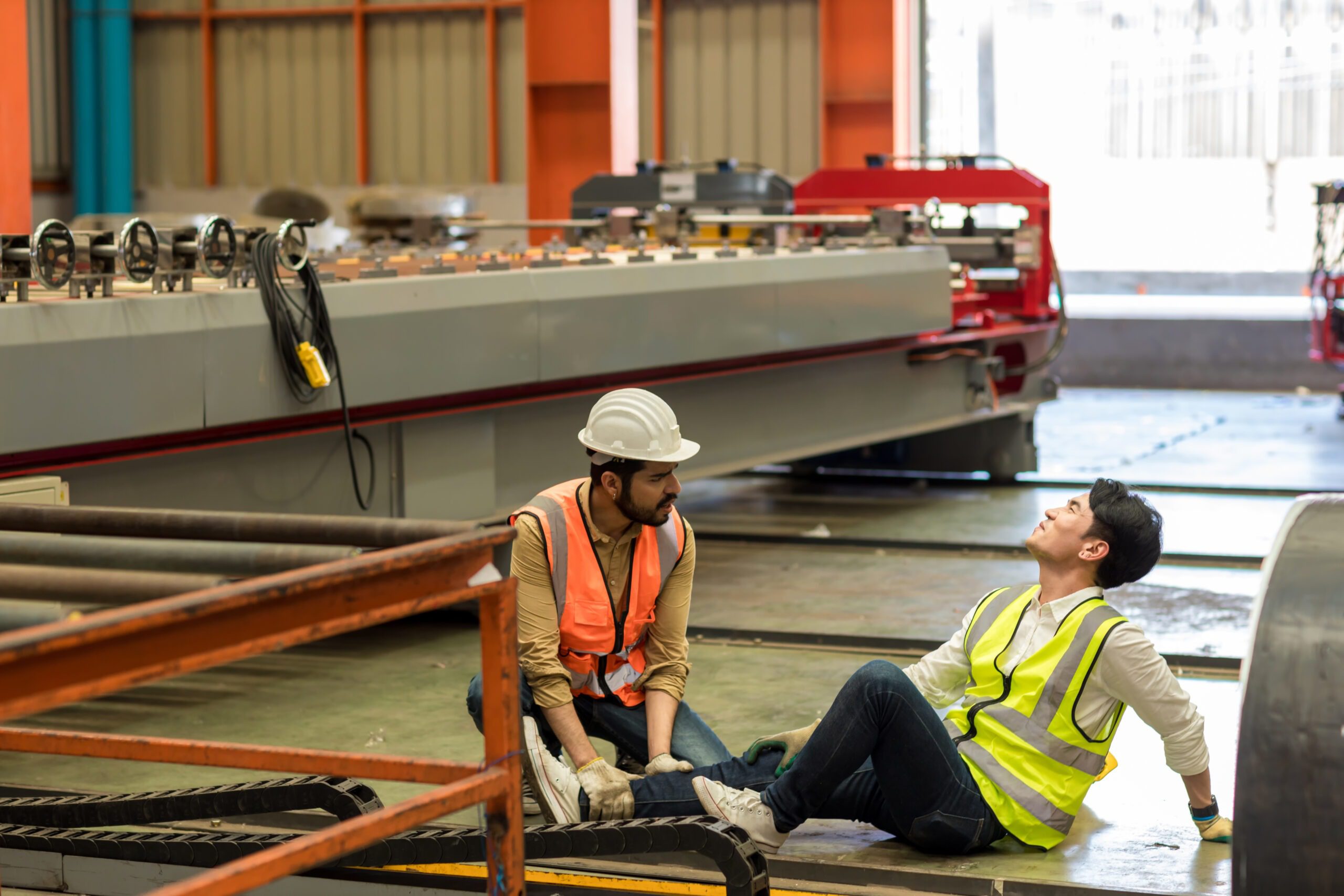
A safety harness buckle opens during a fall. A machine guard breaks while someone clears a blockage. Protective eyewear shatters on impact. After an injury, the immediate concern is treatment. Soon afterward, another question follows: who pays for the damage when equipment that should have protected a worker fails?
The answer depends on how the injury happened and who was responsible. Workers’ compensation often covers the workplace injury, while a separate claim addresses a defective product or another party’s negligence. When failed protective equipment leads to harmful exposure and a work-related disease, legal counsel for occupational illnesses helps workers assess their rights. Those claims serve different purposes, and the rules governing them vary by jurisdiction.
Workers’ Comp Does Not Require Proof of a Defect
For a covered employee, workers’ compensation generally pays benefits for a qualifying work-related injury without requiring proof that the employer acted negligently. A worker does not ordinarily need to establish exactly why a harness failed before pursuing benefits. The connection between the injury and the job is the starting point.
Benefits typically include necessary medical treatment and partial wage replacement during an eligible period away from work. Permanent disability benefits depend on the lasting effects of the injury and the applicable rules. Workers’ compensation generally does not pay damages for pain and suffering.
Report the injury promptly and describe what happened accurately. Tell the treating clinician about the equipment failure and every affected body part. Workers’ compensation lawyers perform useful work when insurers dispute treatment, question the workplace connection, or calculate benefits using incomplete wage records.
A Broken Product Raises Different Questions
A separate product liability claim focuses on the equipment itself. Was a component manufactured incorrectly? Did the design create an unreasonable danger? Were instructions or warnings inadequate? These are distinct legal theories, and each requires evidence linking the alleged defect to the injury.
For example, a buckle made with a faulty internal component raises different questions than a sound buckle damaged through years of improper storage. A failure alone does not establish a product defect. An examination of the equipment, its maintenance history, and the circumstances of use helps distinguish those explanations.
An outside maintenance contractor also deserves scrutiny if its work contributed to the accident. Incorrectly installing a guard or overlooking a documented fault presents a different claim than manufacturing defective equipment. Liability still depends on the contractor’s duties, its conduct, and the connection to the injury.
Employer Negligence Does Not Automatically Mean a Lawsuit
Workers’ compensation is generally the exclusive remedy against a covered employer for an ordinary workplace injury. A missed inspection or ignored replacement request does not automatically create a separate personal injury lawsuit against that employer. Exceptions depend on the governing law and the specific facts.
Claims against legally responsible third parties, such as an equipment manufacturer, are different. Depending on the applicable law, an injured worker has grounds to pursue that claim alongside workers’ compensation benefits. Workers’ compensation lawyers help identify those distinctions and coordinate with attorneys handling related litigation. You’ll find the office location below if you’d like to speak with someone about your claim in person:
Fun fact: A positioning belt and a fall-arrest harness perform different jobs. A positioning system holds a worker in place while working at height; a fall-arrest system stops a fall. Similar-looking equipment is not necessarily interchangeable.
Preserve the Equipment Before Someone Replaces It
Medical care comes first. Once immediate dangers are controlled, photograph the equipment and surrounding area if it is safe to do so. Record identifying numbers and witness names. Write down what happened while the sequence is still fresh.
Ask that the equipment be preserved in its post-accident condition. Do not repair, discard, or test it yourself. A damaged component often contains evidence that photographs miss, including fracture surfaces or signs of wear. Investigations should examine maintenance and training as well as the equipment, rather than stopping at an assumption of worker error.
Check What a Settlement Actually Leaves You
Receiving workers’ compensation does not necessarily end a third-party claim, but the payments interact. An insurer or compensation program often has reimbursement rights against money recovered elsewhere. The calculation depends on applicable law, benefits paid, and other permitted adjustments.
Before signing a release, have the repayment obligations and any effect on future benefits explained in actual figures. A settlement amount on paper is only part of the picture. The number that matters is what remains available for the worker’s recovery after those obligations are addressed.
