
Embedded systems development requires maintaining equilibrium between processing capabilities, mechanical dimensions, and component availability. Industrial controllers, motion platforms, and precision instrumentation demand deterministic execution alongside dependable assembly pipelines. Hardware engineering teams cannot evaluate microcontrollers in isolation from factory supply chain realities.
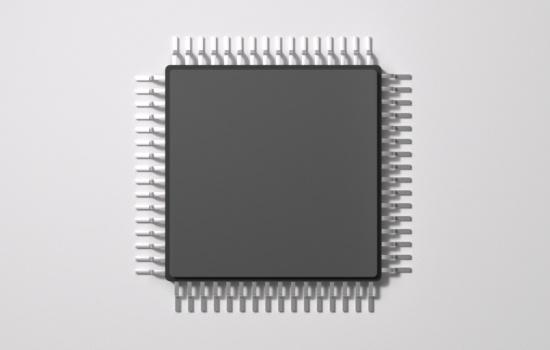
Specifying an integrated circuit involves matching mathematical processing demands against layout constraints and production budgets. Engineering specialists examine whether the STM32F405RGT6 satisfies core processing benchmarks before finalizing hardware schematics. System architects evaluate clock speed, internal memory, and package dimensions to prevent redesigns during full-scale manufacturing.
Hardware design choices carry immediate consequences for component purchasing and assembly line continuity. Neglecting factory packaging formats, moisture exposure sensitivity, or authorized component sourcing can stall production. Bridging hardware design parameters with structured purchasing practices ensures continuous electronic manufacturing throughput.
Computational Throughput and Integrated Program Memory
Architectural performance defines how capably an embedded device handles time-critical control loops and numerical transformations. Manufactured by ST, the microcontroller centers around a 32-bit ARM Cortex-M4 core engineered for demanding computational workloads. The core executes instructions at clock frequencies up to 168MHz, providing ample headroom for real-time applications.
Digital signal processing algorithms and advanced control loops require sustained execution speeds without software bottlenecks. High operating frequencies allow system designers to implement responsive closed-loop feedback routines and active sensor monitoring. Such computational throughput makes the device well-suited for high-performance embedded control across commercial instrumentation and machinery.
On-chip memory capacity directly governs firmware complexity and system maintenance over extended lifecycles. Equipped with 1MB of Flash memory, the STM32F405RGT6 accommodates extensive application software, bootloaders, and field diagnostic stacks. Embedding large on-chip Flash eliminates external memory chips, reducing board complexity and potential failure points.
Complex embedded designs benefit from substantial program space during iterative feature expansion. Embedded software developers retain room for communication stacks, safety monitoring layers, and field upgrade algorithms without exhausting code boundaries. Combining high clock rates with extensive storage provides a balanced platform for intensive industrial automation.
Packaging Constraints, Thermal Limits, and Assembly Standards
Physical enclosure limitations demand compact component packaging without compromising manufacturing yield. Housed in a 64-pin LQFP measuring 10×10mm, this integrated circuit integrates cleanly into space-constrained PCB layouts. Standardized pin pitches support automated assembly processes, facilitating automated optical inspection and reliable solder joint formation.
Thermal tolerances dictate component viability within harsh industrial operating environments. Operating temperature ratings spanning from -40 ℃ to +85 ℃ ensure operational stability across factory floors, control cabinets, and outdoor equipment. Maintaining reliable performance across wide temperature extremes prevents unexpected thermal shutdowns during continuous duty cycles.
Factory packaging formats govern pick-and-place efficiency on automated surface-mount assembly lines. Shipped in standardized tray packaging containing 160 units per pack, the physical delivery format supports high-speed component feeders. Organized tray packing protects delicate lead geometries from mechanical deformation during transportation and warehouse handling.
Moisture Sensitivity Level ratings determine floor life rules and environmental storage protocols inside assembly plants. Classified with an MSL 3 rating, the package requires strict dry-pack storage and monitored exposure times before solder reflow. Adhering to controlled baking procedures prevents internal moisture expansion and package cracking.
Production Disruption Risks Across the Microcontroller Lifecycle
Semiconductor production imbalances frequently introduce delivery delays that impact manufacturing deadlines. Abrupt factory allocation shifts, assembly constraints, and raw material shortages trigger extended lead times for popular 32-bit devices. Organizations lacking redundant procurement channels risk costly manufacturing interruptions when component orders face unexpected factory push-outs.
Open-market trading platforms present severe counterfeit hazards during global component shortages. Unscrupulous brokers circulate remarked microcontrollers, salvaged parts with degraded internal connections, or defective silicon lots. Installing substandard devices compromises equipment reliability, leading to premature field failures, unexpected recall expenses, and damaged corporate reputations.
Defending manufacturing operations against unverified components requires systematic supply chain oversight. Quality-driven procurement departments avoid unaccredited brokers and insist on verifiable lot documentation. Partnering with a reliable MCU supplier helps manufacturers secure authentic stock while navigating volatile global allocation cycles.
Proactive distribution management shields production schedules from spot-market volatility and lead-time shocks. Unibetter distributes a wide range of electronic components, maintaining established supply pipelines to resolve critical procurement bottlenecks. Working with professional distributors allows industrial builders to maintain regular production schedules despite broader semiconductor supply imbalances.
Strategic Criteria for Vetting an Authorized Distribution Partner
Selecting a dependable MCU supplier requires rigorous vendor evaluation that extends beyond baseline part availability. Sourcing teams analyze warehouse storage controls, traceability procedures, and logistics capabilities before issuing purchase agreements. A qualified distribution partner acts as an extension of internal purchasing teams.
Verifiable component provenance remains the fundamental defense against counterfeit infiltration into electronic assemblies. Unibetter sources and procures electronic components from franchised sources to guarantee 100% authentic, quality-assured and brand-new electronic components. Eliminating secondary brokers and unverified open-market vendors shields factory lines from compromised integrated circuits.
Commercial competitiveness demands disciplined expenditure management alongside strict component authenticity. Unibetter supports customers to locate needed electronic components and acquire them at lower costs, enabling steady production schedules. Strategic inventory staging and transparent pricing allow manufacturing enterprises to capture favorable financial terms.
Structured delivery schedules protect assembly lines from unforecasted inventory depletion. Establishing scheduled delivery agreements provides predictable replenishment that aligns with actual factory build rates. Long-term forecasting combined with authorized distributor access prevents expensive expediting fees and emergency line stoppages during cyclical market crunches.
Aligning verified hardware capabilities with dependable procurement partnerships ensures enduring product reliability. Documented silicon performance guarantees engineering feasibility, while authorized distribution safeguards factory continuity. Balancing technical rigor with disciplined vendor qualification allows original equipment manufacturers to deliver resilient electronic devices successfully to competitive commercial markets.
