
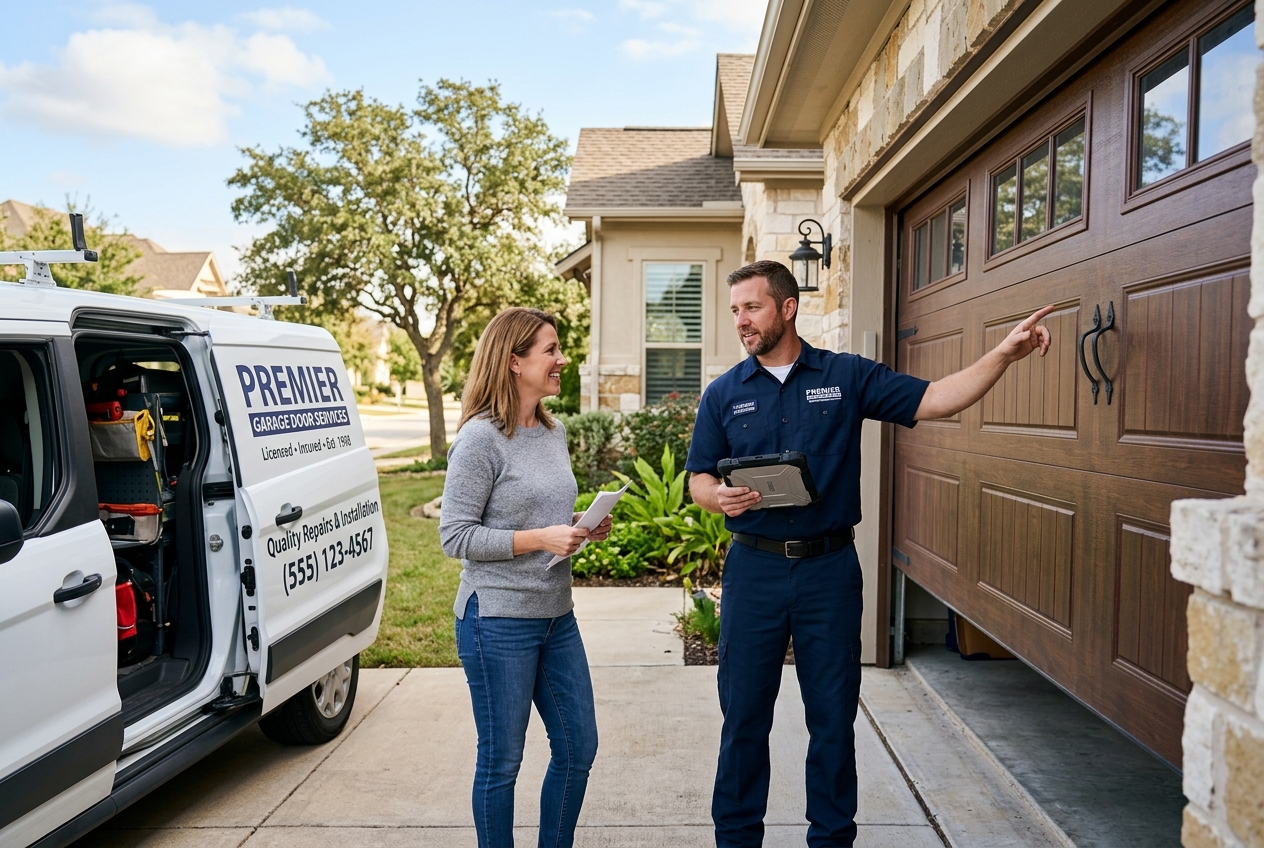
A garage door rarely picks a convenient moment to fail. It may refuse to close when you’re leaving for work or start jerking along its tracks after weeks of making unusual noises. In either case, the goal is to restore reliable operation without overlooking the underlying problem. A worthwhile repair should keep essential garage components in good condition while addressing whatever caused the trouble. Knowing what to expect from a service visit makes it easier to distinguish careful work from a temporary fix.
A Good Diagnosis Starts With the Whole Door
An opener that hums without lifting the door doesn’t automatically need a new motor. A broken spring may be leaving the opener to pull more weight than it was designed to handle. Likewise, a crooked door could point to a cable problem rather than damaged rollers. A technician should examine how the parts work together before identifying the cause. Replacing the most obvious component without investigating the others can leave the same problem waiting to happen.
A thorough inspection also covers problems that aren’t immediately visible. Safety sensors may be misaligned, mounting brackets may have loosened, or worn rollers may be creating resistance along the tracks. These faults can develop gradually, making them easy to overlook until the door stops working. An experienced technician should check the door’s balance, alignment, hardware, and electrical controls where appropriate. The findings should then be explained in terms a homeowner can understand, without relying on technical jargon.
Fixing the Cause Instead of the Symptom
Once the problem has been identified, the next question is whether the proposed repair will actually prevent it from happening again. Some failures are isolated, such as a damaged remote control or a malfunctioning safety sensor. Others affect several connected components. A broken spring, for example, can place additional stress on the opener, while a damaged track may accelerate roller wear. These relationships matter when deciding which parts genuinely need attention.
Consider a door that has slipped off its track. Moving the rollers back into position may restore movement briefly, but it won’t help if a bent section or damaged cable caused the problem. During this type of repair, SAVU Garage Door Repair Inc. can inspect the related hardware and check the complete opening and closing cycle after correcting the immediate fault. That final test matters because the door needs to travel evenly without binding or placing excessive strain on the opener.
Understand the Estimate Before Approving Repairs
A repair estimate should explain what needs fixing, which parts will be replaced, and how much the work will cost. Labor, replacement hardware, adjustments, and additional service charges should be identified before work begins. If the technician recommends several repairs, ask which ones are necessary for safe operation and which can reasonably wait. A clear explanation makes it easier to compare estimates that may appear similar but cover different amounts of work.
There’s also a difference between repairing a functional problem and recommending an upgrade. A damaged spring requires prompt attention, while cosmetic panel damage may not justify replacing the entire door. Full replacement can make sense when structural damage is extensive or several major components are failing. However, that decision should reflect the condition of the system, not a preference for selling new equipment. Ask about parts warranties, workmanship coverage, and any applicable licensing or insurance requirements before committing.
Emergency Repairs Still Require Careful Work
When a garage door becomes stuck open, leaves a vehicle trapped, or moves unpredictably, response time becomes important. However, a quick arrival doesn’t guarantee a satisfactory repair. The technician still needs enough time to identify the failure and determine whether the door can be operated safely. Continuing to operate a door with broken springs, damaged cables, or serious alignment problems can cause further damage. Homeowners should avoid attempting repairs involving high-tension components themselves.
Communication matters during urgent service calls as well. A useful initial conversation should establish what the door is doing, whether it can close securely, and whether any components appear damaged. If replacement parts aren’t immediately available, the technician should explain the next steps and whether the door can be safely secured in the meantime. Realistic scheduling and clear expectations are more useful than promises that every problem can be resolved immediately.
Look for Evidence of Quality Work
A completed repair should leave the door operating smoothly and its safety features functioning correctly. Before finishing, the technician should test the opening and closing cycle, examine the door’s movement, and verify relevant safety controls. Homeowners should also receive an explanation of the work performed, particularly if the repair involved springs, cables, or opener adjustments. Any remaining concerns should be discussed before the service visit ends.
Customer reviews can provide another useful perspective when comparing repair companies. Instead of relying entirely on star ratings, look for repeated comments about accurate diagnoses, clear estimates, punctuality, and problems that stayed fixed. Reviews describing the actual repair experience tend to be more informative than vague praise. A dependable garage door service earns trust through consistent workmanship and straightforward communication. Ultimately, the best measure of a successful repair is a door that operates safely and continues working as expected.
