
Carbon reduction in feed production requires more than replacing one energy source with another. Process heat, electricity, drying demand, transportation, and material losses all contribute to a mill’s overall footprint. A well-planned feed mill equipment manufacturers strategy considers energy flows from raw-material intake through finished-feed dispatch. FAMSUN’s drying technology fits into this broader low-carbon concept without making the discussion about any single supplier.
Map The Mill’s Carbon Sources
Before selecting technologies, engineers need to establish where energy is consumed and where emissions originate. Grinding, pelleting, cooling, drying, conveying, and compressed-air systems have very different energy profiles, so treating the plant as one uniform load can hide the most practical reduction opportunities.
Process data should cover electricity, natural gas, steam, fuel consumption, production volume, and operating hours. Seasonal information matters as well, especially for facilities handling raw materials with fluctuating moisture content.
Once these figures are available, feed machine selection can be assessed against actual energy demand rather than nameplate specifications alone. Such analysis also creates a baseline against which future carbon reductions can be measured.
Build An Energy-Efficient Process Layout
Mill layout has a direct effect on energy use. Shorter conveying routes can reduce motor demand, while sensible equipment placement may lower the need for repeated material elevation. Process integration can also reduce unnecessary transfers between production stages.
Heat-intensive operations require particular attention. Drying systems, boilers, thermal-oil systems, and exhaust streams represent significant opportunities for heat recovery. Waste heat from one process may become useful input for another, provided temperature levels and contamination risks are compatible.
Modern feed mill equipment manufacturers increasingly need to consider equipment as part of an integrated energy system rather than as independent machines. Such thinking allows designers to compare not only individual efficiency figures but also the energy consequences of the entire process arrangement.
Introduce Renewable Energy Strategically
Solar photovoltaic generation is often suitable for facilities with substantial daytime electrical demand. Roof areas, adjacent land, structural capacity, local solar conditions, and grid-connection rules should all be evaluated before installation.
Renewable electricity can also support gradual electrification. Motors, pumps, fans, and selected heating systems may shift away from fossil-fuel energy as the electrical supply becomes cleaner.
Energy storage adds another option where generation and demand do not coincide. Battery systems can help manage peak loads, while thermal storage may be useful when heating demand follows a predictable production schedule. Such measures allow feed machine energy requirements to be coordinated with the plant’s wider electricity strategy.
Recover Heat From Drying Systems
Drying deserves special consideration because moisture removal requires substantial thermal energy. Exhaust air leaving the dryer may still contain useful heat, particularly when incoming material requires sustained drying conditions.
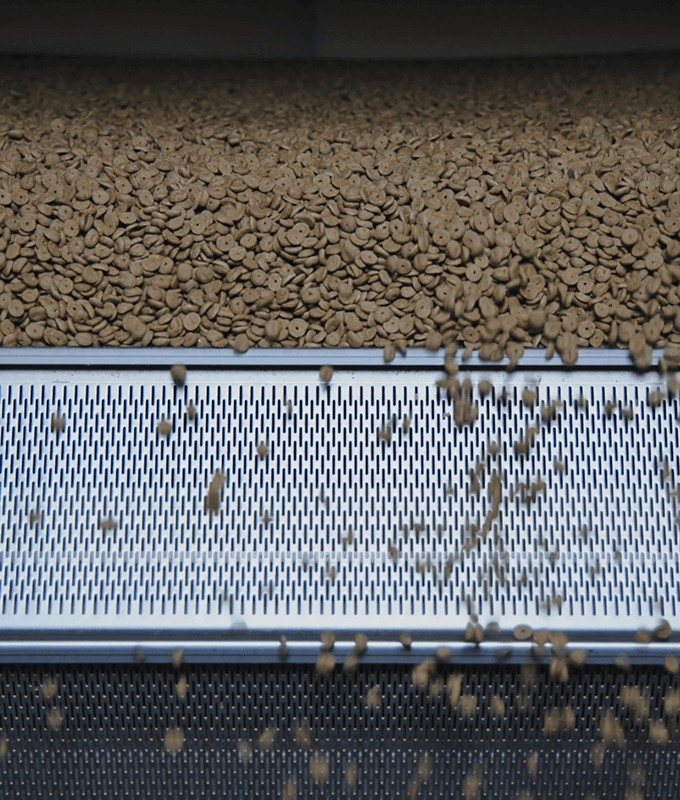
FAMSUN’s WH Series Dryers are designed for applications involving long drying times and high-moisture or high-bulk-density pellets. The system uses four conveyor-belt layers and has a stated production capacity of 10–25 t/h based on floating aquafeed. Its application range includes sinking aquafeed, fermented DDGS, bio-fermentation waste liquid, and high-water-content sludge.
Heat-recovery design should nevertheless be based on the actual plant. Exhaust temperature, humidity, airflow, fouling potential, and seasonal operating conditions determine whether recovered heat can be reused effectively. Correctly matching these factors can reduce the amount of fresh thermal energy required by downstream operations.
Electrify Suitable Production Loads
Electrification works best when individual loads are evaluated according to their operating characteristics. Variable-speed drives can adjust motor output to changing production requirements, while high-efficiency motors may reduce electricity demand over long operating periods.
Fans deserve particular scrutiny because airflow requirements often vary during different production stages. Control systems that respond to actual process conditions can prevent unnecessary power consumption during partial-load operation.
Thermal electrification requires a separate assessment. Heat pumps may suit low- or medium-temperature applications, whereas high-temperature drying may still require other heat sources depending on process requirements. Consequently, feed mill equipment manufacturers should consider temperature demand, operating hours, and available electricity before recommending an electrification pathway.
Manage Carbon Beyond The Factory
Net-zero planning does not stop at the production line. Raw-material transportation, packaging, spare parts, waste treatment, and finished-feed distribution can contribute to the facility’s broader carbon footprint.
Material sourcing offers another area for improvement. Locally available ingredients may reduce transportation emissions, while the responsible use of co-products can improve resource efficiency. Moisture management also matters because transporting unnecessary water increases logistical energy requirements.
Carbon offsets may have a role after direct reduction measures have been evaluated. High-quality projects should be assessed according to additionality, permanence, verification, and transparent accounting rather than treated as a substitute for operational improvements.
Measure, Verify, And Improve
A credible net-zero roadmap requires measurable indicators. Energy intensity per tonne of feed, thermal energy per kilogram of moisture removed, renewable electricity share, fuel consumption, and greenhouse-gas emissions can provide useful operational benchmarks.
Digital monitoring can connect production data with energy performance. Unexpected increases in electricity or thermal demand may reveal worn components, poor process settings, excessive moisture, or inefficient operating schedules.
Periodic reviews should compare actual results with the original carbon model. If production volume, formulations, raw-material moisture, or energy prices change, the strategy may need adjustment. Such flexibility is particularly important because decarbonization is an ongoing engineering process rather than a single equipment purchase.
Conclusion
Net-zero feed production requires a combination of practical engineering decisions rather than reliance on one technology. Renewable electricity can reduce dependence on fossil energy, heat recovery can capture useful thermal value, electrification can reshape the energy mix, and careful carbon accounting can address emissions that remain outside direct plant control.
Drying systems deserve close attention because moisture removal can carry substantial thermal demand, while process layout and digital monitoring influence energy use across the entire facility. FAMSUN’s WH Series Dryer shows how high-moisture applications can be considered within this broader framework. With disciplined measurement and coordinated planning, feed machine energy performance can become one part of a measurable pathway toward lower-carbon mill operations.
