
Color accuracy can influence everything from document review to product inspection, yet it is often overlooked during workspace lighting design. In offices, studios, and commercial environments, a dimmable linear LED light can provide an adaptable source of illumination while maintaining a streamlined appearance.
Its performance depends on more than brightness: color rendering, glare control, color temperature, and fixture placement all shape the visual experience. Drawing on its experience in LED lighting, LEDIA Lighting offers a relevant industry reference for project buyers assessing lighting solutions for different work environments.
Why Color Rendering Matters in Workspaces
The Color Rendering Index (CRI) describes how accurately a light source reveals object colors compared with a reference source. A higher CRI can make differences between similar shades easier to distinguish, which is useful in graphic design studios, photography workspaces, textile departments, and product inspection areas. In ordinary office settings, color accuracy also affects how printed materials, clothing, and interior finishes appear under artificial light.
CRI should not be treated as the only measure of visual quality. Two lighting products with the same CRI rating may still produce different visual results because of variations in their spectral power distributions. R9, which relates to the rendering of saturated red, can be particularly relevant in environments where skin tones, artwork, or certain product colors need careful evaluation. Buyers may request additional color-rendering data when the application demands more than general office illumination.
The relationship between light and surrounding materials also deserves attention. White walls can reflect substantial light into a room, while dark finishes absorb more of it. Desk surfaces, monitor positions, partitions, and ceiling height influence how evenly illumination reaches the working area. A lighting plan based on actual room conditions is more useful than relying on a fixture’s CRI rating or lumen output in isolation.
Balancing Brightness, Color Temperature, and Glare
Brightness requirements vary across different workspace activities. Reading documents, working with detailed drawings, and inspecting small components may call for different illumination levels. Excessive brightness, however, does not automatically improve visibility. Strong reflections on screens or glossy desks can cause discomfort, while poorly distributed light may create sharp contrasts between the task area and its surroundings.
Color temperature contributes to the character of a workspace. Neutral white light is commonly used in offices because it provides a balanced appearance, while cooler settings may be preferred in some technical or inspection environments. Warmer tones can create a more relaxed atmosphere in informal meeting spaces. Tunable systems give facility managers additional flexibility, although the selected range should suit the visual tasks and interior design.
Glare control is especially important in screen-based workplaces. The position of luminaires relative to monitors, windows, and users can affect reflections and visual comfort. Diffusers, optical lenses, shielding, and indirect illumination can help manage excessive brightness. A dimmable LED strip may also provide localized or integrated lighting that can be adjusted to suit changing tasks, provided the driver and control system support the intended dimming method.
Designing Flexible Lighting for Different Work Tasks
Workspaces rarely serve a single purpose throughout the day. A meeting room may shift from presentations to collaborative discussions, while a design studio can alternate between computer-based work and detailed material assessment. Dimming allows illumination levels to respond to these changes rather than keeping every area at one fixed output. Separate control zones can also prevent unused areas from receiving unnecessary light.
Control compatibility needs careful review during specification. Triac, 0–10V, DALI, and other dimming methods use different control principles, so the driver, switch, and control equipment must be compatible. Some systems may also experience flicker, limited dimming range, or uneven response at low brightness levels. Testing the intended combination before installation can help identify these issues.
The physical form of a luminaire influences how easily it fits into a workspace. Linear lighting can follow desk rows, shelving, counters, and display structures, while slim fixtures may integrate more discreetly into furniture or architectural details. Magnetic mounting can be useful in applications that require convenient positioning or adjustment, although the mounting surface and electrical connection still need to meet the product’s requirements.
Evaluating High-CRI Products and Project Specifications
Procurement teams should compare complete technical specifications rather than relying on a single headline figure. Relevant information includes CRI, R9 where available, lumen output, efficacy, color temperature, beam distribution, rated power, dimming protocol, and expected operating conditions. For projects involving several rooms or long lighting runs, consistency between batches is also important because visible color differences can undermine an otherwise coordinated design.
Samples should be tested in the actual workspace wherever practical. A sample review can reveal how the light interacts with wall colors, furniture finishes, screens, and displayed materials. It also provides an opportunity to assess dimming smoothness and color appearance at different output levels. This practical check is particularly valuable for studios, retail backrooms, and quality-control areas where visual tasks are sensitive to lighting variation.
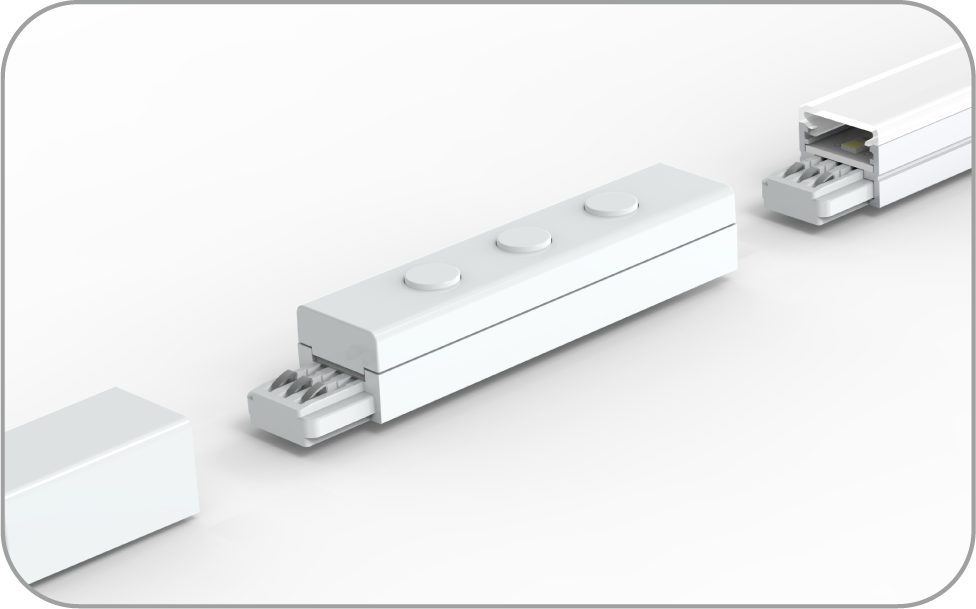
For retail, display, and integrated lighting applications, LEDIA Lighting offers the Needle G02, a dimmable linear LED light with magnetic mounting, Triac dimming, and tunable color temperature. Its slim profile supports discreet installation, while its CRI rating of greater than Ra90 is suited to applications where color appearance matters. These features give project buyers a specific example to assess when comparing high-CRI linear lighting and adjustable control options.
Conclusion
Workspace lighting should support the work being performed, not simply provide a uniform layer of brightness. Color rendering helps preserve the appearance of materials and products, while thoughtful fixture placement, glare management, and suitable control systems contribute to a more comfortable environment.
A carefully specified dimmable linear LED light can adapt to different tasks, and a well-matched dimmable LED strip can add adjustable illumination to integrated work areas. Through its range of linear and integrated lighting products, LEDIA Lighting provides project buyers with options to consider when developing workspace lighting schemes that balance visual accuracy, flexibility, and practical installation needs.
